Striped Bass Fishing — Hamptons Charter Co., East End Long Island
Striped bass — affectionately called 'stripers' by locals — are the heartbeat of East End fishing culture. These powerful anadromous fish can grow to 60+ lbs and are prized as much for their fight as their table fare. Their distinctive horizontal stripes make them instantly recognizable. Stripers feed aggressively on bunker (menhaden), sand eels, squid, and crabs, making them one of the most adaptable and exciting targets in the Northeast.
Striped bass follow one of the Atlantic coast's most predictable migration corridors. They winter in the Chesapeake Bay and Hudson River systems, then push northward beginning in late March and April. By May and June, large fish are stacking up along the South Shore of Long Island and off Montauk Point. Peak season in the Hamptons runs May through October, with trophy-class fish chasing bunker schools in the fall. The fall migration back south from New England creates spectacular Montauk blitz conditions in September and October.
Hamptons Charter Co. targets stripers using multiple proven techniques. In spring and summer, we run live-lining with bunker — drifting live menhaden in the current around Shinnecock Inlet and the Montauk rips. Chunking with fresh bunker is deadly during fall migration. We also work the beaches and jetties with soft plastics and topwater lures during low-light hours. Trolling umbrella rigs and parachute jigs is highly effective when fish are suspended in the water column.
Fluke (Summer Flounder) Fishing — Hamptons Charter Co., East End Long Island
Fluke — officially known as Summer Flounder — are one of the most popular inshore targets along the East End. These ambush predators lie flat on sandy bottom, using both eyes to track prey. Fluke are aggressive feeders that attack squid, spearing, and small fish with surprising speed. They're also outstanding table fare — mild, white, flaky flesh that is highly prized in top Hamptons restaurants.
Fluke are a migratory species that arrive in nearshore and bay waters as water temperatures warm in May and June. They spend summer in the bays, inlets, and nearshore ocean of the East End. As water cools in September and October, they migrate to deeper offshore waters (80–150+ feet) for winter. The summer months offer the best action in Shinnecock Bay, Mecox Bay, and the nearshore ocean just outside the inlets.
We target fluke by drifting over sand and grass-bottom areas in the bays and nearshore ocean. The preferred presentation is a fluke-style rig with squid, gulp, or fresh-caught killies bouncing just above the bottom. Captain identifies productive drift lanes based on current and bottom structure. We also target fluke along channel edges inside Shinnecock Inlet where tidal currents concentrate baitfish.
Black Sea Bass Fishing — Hamptons Charter Co., East End Long Island
Black sea bass are one of the most sought-after inshore species in the Northeast. These compact, hard-fighting fish inhabit rocky structure, artificial reefs, and wrecks from shallow nearshore waters to depths exceeding 120 feet. Their electric blue-tinged scales and aggressive fighting style make them a favorite. Black sea bass are protogynous hermaphrodites — females can become dominant males — and larger males develop a distinctive blue hump on their heads.
Black sea bass are year-round residents of the East End, though they redistribute seasonally. In warmer months, they move into shallower inshore structure, reefs, and rocky areas. As temperatures drop in fall, they migrate to deeper offshore areas (100–200 feet). Large black sea bass are present around Montauk and the South Shore wrecks throughout the year, with peak inshore action from May through November.
We drop directly to structure with hi-lo rigs baited with squid, seaworms, or fresh clams. Anchor positioning is critical — Captain places the boat uptide of known structure so baits drift perfectly into the fish's feeding zone. We also use light jigs tipped with squid strips for larger fish holding deeper. Wreck fishing with cut bait produces the biggest specimens.
Bluefish Fishing — Hamptons Charter Co., East End Long Island
Bluefish are the berserkers of the Atlantic coast — notoriously aggressive, pack-hunting predators with razor-sharp teeth and an insatiable appetite. They travel in schools and will slash through baitfish in a feeding frenzy that turns the surface white with spray. Blues range from small cocktail blues of 1–3 lbs to trophy gator blues exceeding 20 lbs. They fight with raw, relentless power and are one of the most electrifying inshore targets in the Northeast.
Bluefish follow an extensive Atlantic coast migration. They winter in Florida and the Carolinas and begin their northward push in April. They arrive in Long Island Sound and the South Shore in May and June, reaching peak populations in the Hamptons from July through September. Fall migration back south creates spectacular blitz conditions in October, with schools of blues chasing bunker at the surface right off the Hamptons beaches.
We target bluefish by locating surface feeding activity — diving birds and boiling water are the giveaways. Once a blitz is found, we cast metal lures (diamond jigs, Hopkins, poppers) directly into the melee. Trolling drone spoons and surgical tube lures is effective for covering water when fish aren't actively feeding. Wire leader is mandatory — bluefish teeth will sever mono in an instant.
Porgy (Scup) Fishing — Hamptons Charter Co., East End Long Island
Porgy — called scup throughout New England — are one of the most underrated species in the Northeast. They provide relentless biting action and surprisingly strong fights on light tackle. Porgies have tough mouths with powerful, crushing teeth designed to eat clams, mussels, and crabs off hard bottom. They're also fantastic eating — sweet, mild flesh that is a staple of Portuguese and Mediterranean cooking traditions.
Porgy move offshore to warmer, deeper water (60–120 feet) in winter and return to nearshore structure as water warms in spring. They're found throughout the East End from May through November, congregating around reefs, rocky bottom, and wrecks. The best action often comes during summer months when porgies stack up on nearshore structure in 30–60 feet of water.
Porgy fishing is wonderfully simple and accessible for all skill levels. We use light to medium tackle with two-hook bottom rigs baited with strips of clam, squid, or seaworm. Once the boat is anchored over rocky or hard bottom, the action is typically non-stop. Kids and first-time anglers consistently catch limits — it's some of the most pure, fun fishing on the East End.
Blackfish (Tautog) Fishing — Hamptons Charter Co., East End Long Island
Blackfish — known as tautog throughout the Mid-Atlantic — are the ultimate test of bottom fishing skill. These thick-bodied fish live around rock piles, jetties, wrecks, and boulder fields. Their powerful teeth crush crabs and mussels effortlessly. Tautog are notoriously tackle-shy and will immediately dive back into structure after striking — the challenge is turning them before they can cut the line. They're phenomenal eating fish, with firm, white, mild flesh.
Blackfish are year-round residents of the East End, though their activity level varies dramatically with water temperature. They're most active in fall (September–December) and spring (March–May) when water temps hover in the 48–62F sweet spot. In summer, they retreat to deeper, cooler water and become sluggish. The fall run produces the biggest, most aggressively feeding blackfish of the year.
Tautog require heavy-duty tackle — stout rods and 40–50 lb braided line minimum. We bait up with green crabs (their preferred food), fiddler crabs, or sand fleas on a simple single-hook rig positioned right on the bottom. The key is fishing absolutely vertical over structure and being ready for a lightning-fast pickup. When a tautog hits, you must immediately reel hard — hesitation means a cut-off.
False Albacore Fishing — Hamptons Charter Co., East End Long Island
False albacore — called albies by devotees — are the fastest, most explosive light-tackle target in the Northeast. These small tuna relatives attack baitfish at blistering speed, creating surface explosions visible from hundreds of yards. On appropriate tackle (10–15 lb), an albie will peel 200 yards of line in seconds. They're a notoriously finicky, catch-and-release species that requires precise presentation and is considered the holy grail of Hamptons fall fishing.
False albacore arrive at the East End with the first major cold fronts of September, following sand eels and rainfish south along the coast. They push through Montauk Point and along the South Shore beaches in incredible numbers from mid-September through November. The windows are unpredictable but explosive when they happen — schools in the thousands may be visible from the beach, crashing bait with reckless abandon.
Albie fishing requires finesse. We run ultralight spinning or fly tackle — 10–15 lb fluorocarbon leaders and small (1–1.5 inch) metal slabs, Hogy epoxy jigs, or small Clouser flies that match the tiny sand eel profile. The game is: locate feeding fish by sight, cut off the engine, cast ahead of the school, and retrieve at extreme speed. All fish are carefully revived and released.
Weakfish Fishing — Hamptons Charter Co., East End Long Island
Weakfish — named not for their fighting ability but for the tender tissue around their mouth — were once one of the most abundant inshore species in the Northeast. Population fluctuations have made them rarer today, making a quality weakfish encounter genuinely special. These beautiful fish feature iridescent golden and green markings and fight with their characteristically erratic, head-shaking style. Their soft, delicate flesh is among the most exquisite table fare of any inshore species.
Weakfish migrate northward in spring, arriving in the bays and inshore waters of the East End from May through August. They favor grassy areas, sandy flats, and channel edges inside the bays — particularly around low-light periods of dawn and dusk. By late fall they push offshore and southward. Finding them requires local knowledge of the specific bay habitats they prefer.
We target weakfish using light tackle with small soft plastic lures, bucktails, and live grass shrimp. The key is fishing slowly and gently near the bottom in protected bay waters during twilight periods. Weakfish are ambush feeders that respond to realistic, slow presentations. Their tender mouths require a careful, non-aggressive hookset — lift rather than jerk — and gentle handling during the fight.
Atlantic Mackerel Fishing — Hamptons Charter Co., East End Long Island
Atlantic mackerel are among the most abundant pelagic fish in the North Atlantic — and among the most overlooked by sport anglers who don't realize what they're missing. These torpedo-shaped, iridescent fish travel in enormous schools near the surface, feeding on zooplankton and small baitfish. On light tackle, mackerel provide fast-and-furious fishing action. They're also prized as live bait for striped bass, bluefish, and tuna.
Atlantic mackerel follow a seasonal migration driven by water temperature and baitfish availability. They move inshore and northward in spring as water warms, appearing in the Hamptons from March through June. A second run occurs in fall as water cools and they push back south, sometimes in enormous schools. They're highly pelagic and can be found from the surface down to several hundred feet.
Sabiki rigs — multi-hook feather or flasher rigs — are the go-to for mackerel. We drift over schools or jig small diamond jigs near the surface. When mackerel are active, it's common to catch 4–6 fish at a time on a single cast. We often target them as a precursor to larger fishing — getting a livewell full of fresh mackerel before heading out for bluefin or stripers is a serious tactical advantage.
Atlantic Cod Fishing — Hamptons Charter Co., East End Long Island
Atlantic cod are the fish that built New England. These iconic cold-water bottom dwellers can grow to 50+ pounds and live in deep, cold water around offshore wrecks, rocky bottom, and ledges. Their white, flaky, mildly sweet flesh is one of the most versatile and delicious of any North Atlantic species. A large cod in the boat is a genuinely meaningful catch — a connection to centuries of Northeast fishing tradition.
Atlantic cod are cold-water specialists that inhabit the deeper offshore waters south of Long Island and around historic fishing grounds like Cox Ledge and Block Island Sound. Winter cod fishing — when water temps drop into the 40s — is when they're most accessible from the East End. They move into slightly shallower water (80–180 feet) in winter and early spring, then retreat to deeper, colder Atlantic waters as summer approaches.
Cod fishing means deep-water bottom fishing over known structure. We target wrecks and hard bottom in 100–200 feet, using large clam-baited hi-lo rigs or heavy jigs (Butterfly jigs, slow-pitch jigs) in white, pink, or chartreuse. Captain runs the boat over structure using GPS and drops happen precisely at the right moment. Because we're fishing deep with current, heavy sinkers (8–16 oz) are necessary.
Pollock Fishing — Hamptons Charter Co., East End Long Island
Pollock are the underappreciated workhorses of the Northeast bottom fishing world. Closely related to cod, they're often mistaken for their more famous cousin — but pollock fight harder, bite more aggressively, and are equally delicious. They're built for speed compared to cod: sleeker, more aggressive, and with a slightly more pronounced lateral line. Pollock are associated with offshore structure, wrecks, and rocky bottom in 80–200+ feet.
Like cod, pollock prefer cold, deep water and are most accessible from the East End during fall and winter months. They're associated with offshore structure, wrecks, and rocky bottom in 80–200+ feet. Spring brings some nearshore action around rocky inshore structure before they retreat to deeper, colder water in summer.
Pollock are caught using the same techniques as cod: baited bottom rigs with clam over deep structure, or jigs worked with a more active retrieve than cod typically require. Pollock are particularly responsive to metal jigs retrieved quickly through the water column — they'll chase a jig up 30–40 feet off bottom. Light jigs in white, chartreuse, and pink with UV finishes are highly effective.
Bluefin Tuna Fishing — Hamptons Charter Co., East End Long Island
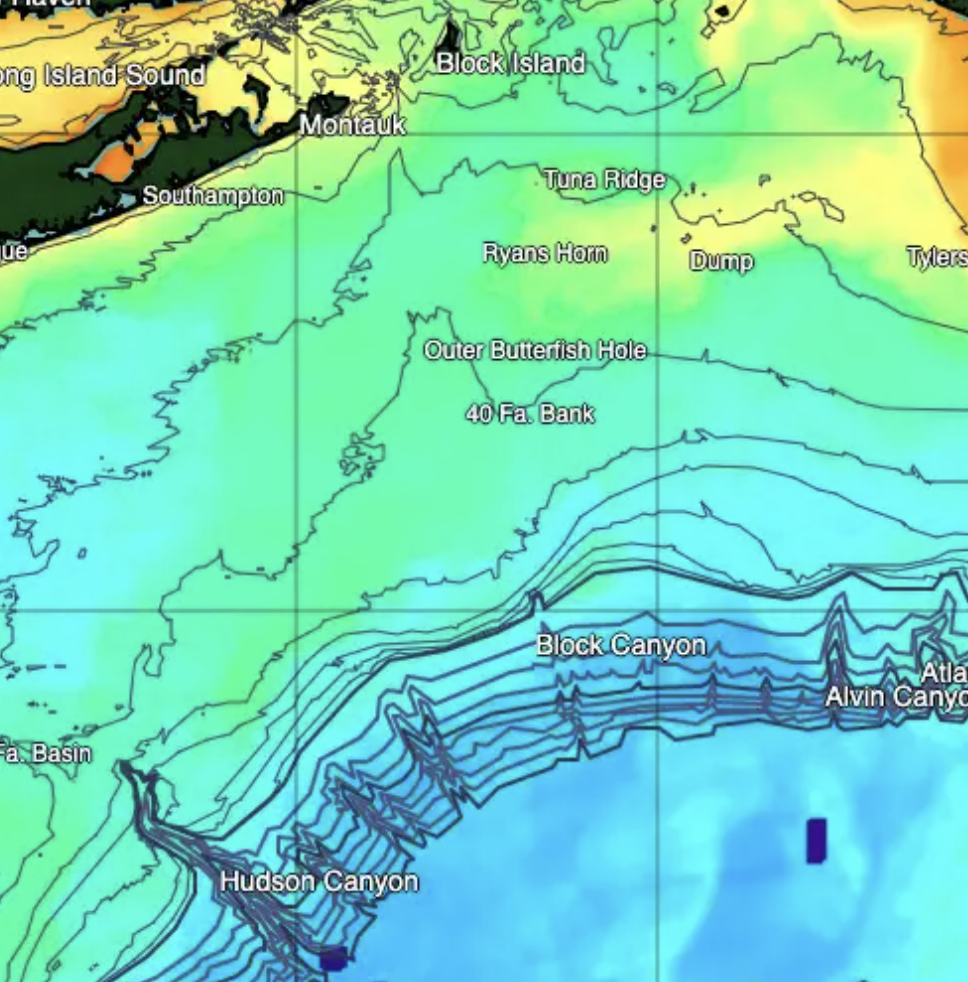
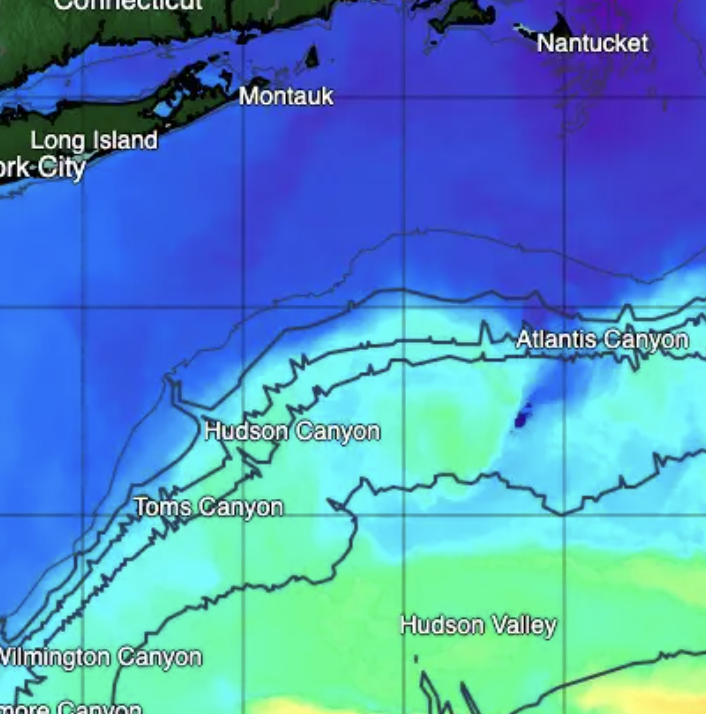
Bluefin tuna are the apex predator of the Atlantic ocean — massive, hydrodynamically perfect, breathtakingly powerful fish that can weigh over 1,000 pounds and swim at 45 mph. Catching a bluefin from the canyons south of the Hamptons is a life-defining fishing experience. The East End of Long Island sits adjacent to some of the most productive bluefin grounds in the entire Atlantic, including the fabled Hudson Canyon.
Giant bluefin tuna undertake one of the most remarkable migrations of any fish — crossing the Atlantic Ocean between their western Atlantic feeding grounds and their Mediterranean spawning areas. Schools of giant bluefin (300–1,000+ lbs) and medium bluefin (30–200 lbs) arrive in the waters off Long Island beginning in June, following the concentration of bunker and other baitfish. Peak season runs July through October at Block Canyon, Hudson Canyon, and Baltimore Canyon just 60–80 miles offshore.
We run offshore to the edge (60–100+ miles) targeting bluefin with live bait (chunking with fresh bunker and mackerel), trolling spreader bars and daisy chains, and high-speed trolling. Kite fishing with live bait is devastatingly effective. When a school is located, stand-up conventional tackle (50–80 lb class) is required. Fighting a large bluefin can last 45 minutes to several hours. This is serious offshore fishing — and the most memorable charter we offer.
Yellowfin Tuna Fishing — Hamptons Charter Co., East End Long Island
Yellowfin tuna are the elite offshore prize for most East End captains and anglers — fast, powerful, and willing to push 400 lbs. Their characteristic bright yellow finlets and brilliant coloring make them one of the most beautiful fish in the ocean. Yellowfin arrive at the Block Canyon and Hudson Canyon from Gulf Stream-influenced waters beginning in June and peak through August. On 30–50 lb tackle, a yellowfin puts on a performance that veteran anglers still talk about years later.
Yellowfin are warm-water pelagic fish that follow the Gulf Stream's northward push. As the Stream meanders closer to the New York Bight in summer, yellowfin appear in the productive offshore canyons. They follow temperature breaks and current edges, often feeding near the surface in mixed-species schools. Water temps above 68F are ideal; peak season runs June through September.
We run to the canyons (60–80 miles offshore) and find productive water by targeting temperature breaks, color changes, and current edges. Chunking fresh butterfish and squid is standard — creating a slick that draws yellowfin to the surface. Once fish are spotted, we pitch live bait or switch baits. High-speed trolling with spreader bars, bird rigs, and cedar plugs is effective for locating fish.
Bigeye Tuna Fishing — Hamptons Charter Co., East End Long Island
Bigeye tuna are the deep-diving, cold-water specialists of the tuna world. Named for their enormous, light-gathering eyes — built for hunting in dim, deep water — bigeye regularly exceed 200 lbs and have been caught to 400+ lbs in the Atlantic. Bigeye are distinguished from yellowfin by their larger eyes, slightly deeper body, and longer pectoral fins. Bigeye are considered by many chefs and sushi connoisseurs to be the finest-eating tuna in the world — their high fat content creates an extraordinary, buttery flavor.
Bigeye are found in the Atlantic canyons from late summer through fall — slightly later and in deeper water than yellowfin. They spend daylight hours deep (300–600 feet), rising toward the surface at night to feed. Canyon fishing at night — a specialized technique — produces the largest bigeye. They're associated with deep, cold, nutrient-rich canyon water where temperature breaks concentrate baitfish at depth.
Targeting bigeye requires specialized deep-water techniques. We present natural baits (squid, mackerel, herring) on deep-drifting rigs at 200–400 feet using weights to get baits into the fish's daytime feeding zone. Night fishing with drifted squid near canyon heads is a proven bigeye method. Chunking and live-baiting on the surface also produces bigeye when they're actively feeding topside.
Wahoo Fishing — Hamptons Charter Co., East End Long Island
Wahoo are the rockets of the offshore world — built for pure speed with a torpedo body, a mouth full of razor-sharp teeth, and a first run that simply does not stop. Wahoo can exceed 60 mph and peel 200 yards of line before an angler can react. They're a warm-water species that pushes into the East End canyons during peak summer when Gulf Stream influence is strong. Finding a wahoo on a Hamptons canyon trip is a spectacular bonus.
Wahoo are pelagic, warm-water fish that follow the Gulf Stream's edge. They arrive off Long Island when warm, blue water pushes the closest to shore — typically July through September. They're associated with offshore structure and temperature breaks, often holding in areas where warm Gulf Stream water meets cold upwelling. Wahoo are solitary or travel in small groups rather than large schools.
High-speed trolling is the primary wahoo technique — specifically trolling rigged baits and lures (ballyhoo, strip baits, skirted lures) at 14–20 knots. At that speed, wahoo cannot resist. Wire leader is absolutely mandatory — their teeth will cut through any mono or fluorocarbon instantly. In-line sinkers or planers get baits below the surface chop.
Tilefish Fishing — Hamptons Charter Co., East End Long Island
Golden tilefish are among the most beautiful and most delicious fish in the Atlantic. Their spectacular iridescent yellow and blue-green coloring makes them look like something from a tropical reef — yet they live in deep, cold, canyon-edge water at 400–900 feet depth. Their flesh is extraordinary — firm, sweet, and delicate, often compared to lobster or crab in flavor. Top seafood restaurants consider them a premium ingredient.
Tilefish are non-migratory — they live and die in the same deep-water habitat, making them the most location-dependent species we target. They're found along the continental shelf edge at 400–900 feet depth, particularly in areas with soft, muddy bottom where they can excavate their distinctive burrows. The grounds south of Long Island hold excellent tilefish populations year-round.
Tilefish require dedicated deep-water effort. Electric reels are strongly recommended — hand-cranking 500 feet of line with a large fish on the end is extremely taxing. We use heavy bottom rigs (24–32 oz sinkers) with squid, clam, and cut fish baits. GPS precision is critical to hitting known tilefish burrow areas. The drop alone takes several minutes. But the reward — pulling up a stunning 20–40 lb golden tilefish from 500 feet — is absolutely worth it.